

Guide to Solar Net Metering in India: Working, Advantages, and Installation
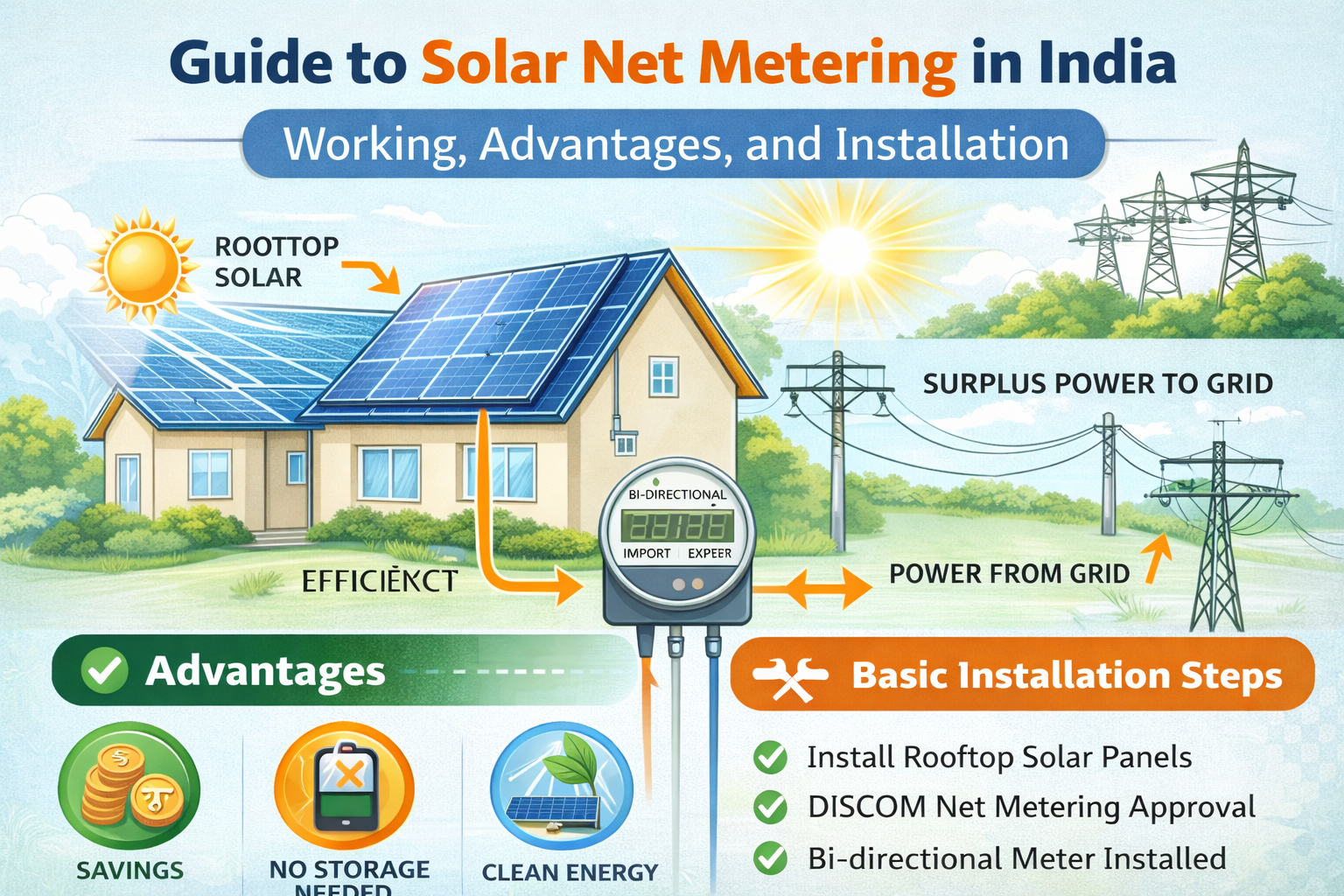
With rising electricity costs in India, solar net metering has become a popular way for homeowners, businesses, and industries to save money while using clean energy. By understanding how net metering works, its benefits, and the installation process, you can make the most of your solar investment.
What is Solar Net Metering?
Solar net metering is a system where excess electricity generated by your solar panels is fed back into the grid, and you receive credits on your electricity bill. For instance, if your panels produce more energy than your household or business consumes during the day, the surplus electricity is exported to the grid. You can then use these credits when drawing electricity from the grid at night or on cloudy days.
For homeowners interested in maximizing their savings, check out residential solar systems designed for homes across India.
How Does Net Metering Work?
-
Solar Energy Generation: Panels generate electricity from sunlight.
-
Consumption: Your home or business uses the electricity first.
-
Excess Exported: Any surplus electricity goes back to the grid through a bidirectional net meter.
-
Billing Adjustment: The utility calculates your net consumption, reducing your electricity bill accordingly.
Businesses can take advantage of this system with commercial solar solutions, ensuring efficient energy use and cost savings.
Advantages of Solar Net Metering
-
Lower Electricity Bills: Reduce monthly energy expenses through grid credits.
-
Efficient Energy Use: No wasted electricity; surplus power benefits the grid.
-
Promotes Renewable Energy: Supports India’s shift to clean energy sources.
-
Less Dependence on Batteries: Net metering reduces the need for expensive battery systems.
-
Long-Term Savings: Payback periods are short, and continued savings are significant.
Industries with high energy demands can implement industrial solar solutions to benefit from large-scale net metering and reduce operational costs.
How to Install a Net Metering System
-
Assess Energy Needs: Calculate your daily electricity usage.
-
Select Solar Panels: Choose high-efficiency panels suitable for your space.
-
Apply to Utility Provider: Obtain approval from your local electricity company.
-
Install Bidirectional Meter: Certified installers will fit a meter to measure electricity flow in both directions.
-
Commission the System: Once installed, your solar system will start generating power, with net metering credits reducing your bills.
For complete guidance and solutions tailored to your needs, visit the Namaste Solar homepage.
Conclusion
Solar net metering in India is a cost-effective way to save on electricity bills while promoting renewable energy. Whether you are a homeowner, business, or industrial operator, net metering ensures you get the most out of your solar investment, reduce costs, and contribute to a greener future.