
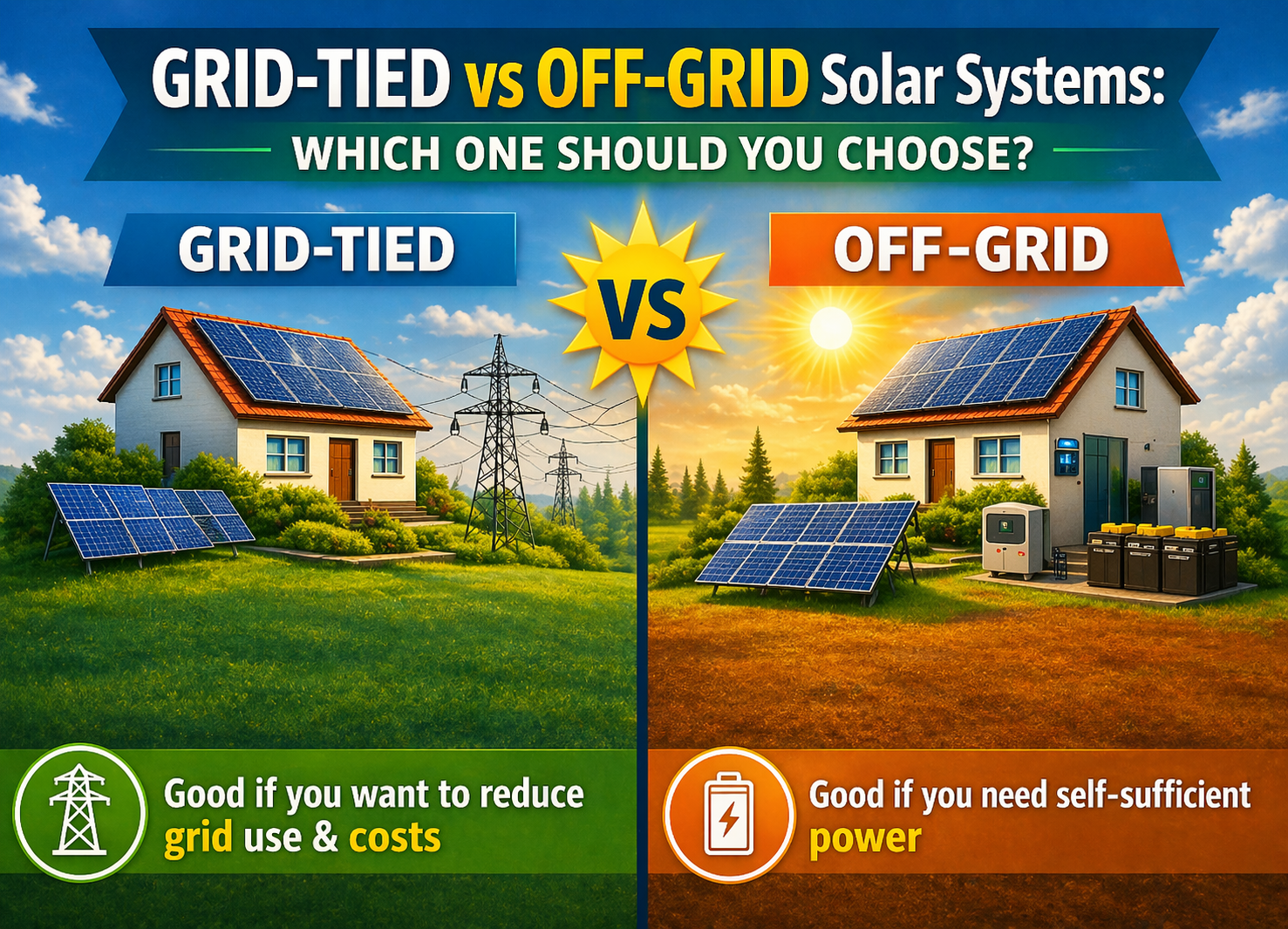
Grid-Tied vs Off-Grid Solar Systems: Which One Should You Choose?
 Introduction
Solar energy is becoming one of the most popular ways for homeowners and businesses to reduce electricity costs and adopt clean energy solutions. With rising electricity prices and increasing awareness about renewable energy, many people are installing solar panels on their rooftops.
Today, solar power is used in homes, offices, and industries to generate sustainable electricity. Companies like Namaste Solar India provide advanced solar solutions that help homeowners and businesses reduce energy costs and switch to renewable power.
However, before installing a solar system, one important decision you need to make is choosing between a grid-tied solar system and an off-grid solar system. Both systems generate electricity using solar panels, but they work in different ways and are suitable for different situations.
In this guide, we will explain the differences between grid-tied and off-grid solar systems, their advantages, and how to choose the right system for your needs.
What is a Grid-Tied Solar System?
A grid-tied solar system is connected to the local electricity grid. This means your solar panels generate electricity for your home or business while remaining connected to the utility power supply.
Grid-tied systems are widely used in Residential Solar Installations because they help homeowners reduce electricity bills while still having access to grid electricity when needed.
During the day, solar panels generate electricity that powers your home appliances. If the system produces more electricity than your home uses, the excess power can be exported to the grid through net metering, depending on local electricity policies.
At night or during cloudy weather, when solar production is low, your home automatically uses electricity from the grid.
Advantages of Grid-Tied Solar Systems
Lower Installation Cost
Grid-tied systems do not require expensive battery storage, making them more affordable compared to off-grid systems.
Reduced Electricity Bills
Solar panels generate electricity during the day, reducing the amount of power you purchase from the grid.
Net Metering Benefits
Excess electricity can be sent back to the grid, which may further reduce your electricity bills.
Easy Maintenance
Grid-tied solar systems are simple and require minimal maintenance.
Limitations of Grid-Tied Solar Systems
Power Outages Affect the System
During a power outage, most grid-tied systems automatically shut down for safety reasons.
Dependence on the Grid
You still rely on the electricity grid when solar production is low.
What is an Off-Grid Solar System?
An off-grid solar system works completely independently from the electricity grid. It generates electricity from solar panels and stores the energy in batteries for later use.
This system is ideal for locations where grid electricity is unavailable or unreliable.
During the day, solar panels generate electricity and charge the battery storage system. The stored energy can then be used at night or during cloudy weather.
Off-grid systems are often used in remote homes, farms, and rural areas where grid electricity is not accessible.
Large businesses and manufacturing units may also adopt solar power solutions like Industrial Solar Systems to generate independent energy and reduce operational costs.
Advantages of Off-Grid Solar Systems
Complete Energy Independence
You are not dependent on the electricity grid.
Reliable Power in Remote Areas
Off-grid systems provide electricity in rural locations without grid connectivity.
Protection from Power Outages
Your home or business continues to receive electricity even when grid power fails.
Limitations of Off-Grid Solar Systems
Higher Installation Cost
Batteries and additional equipment significantly increase the overall cost.
Battery Maintenance
Energy storage batteries require maintenance and may need replacement after several years.
Limited Energy Availability
Electricity usage must be managed carefully since energy depends on solar production and battery capacity.
Key Differences Between Grid-Tied and Off-Grid Solar Systems
| Feature | Grid-Tied System | Off-Grid System |
| Connection | Connected to electricity grid | Completely independent |
| Battery Requirement | Usually not required | Required |
| Cost | Lower installation cost | Higher installation cost |
| Power Backup | No backup during outages | Provides backup power |
| Best For | Urban homes and businesses | Remote areas without grid |
Which Solar System Should You Choose?
Choosing between a grid-tied and off-grid solar system depends on your location, electricity usage, and budget.
Choose a Grid-Tied Solar System If:
- You live in a city or town with a reliable electricity supply
- You want to reduce electricity bills
- You want a cost-effective solar installation
- Net metering is available in your area
Grid-tied systems are also widely used in businesses through Commercial Solar Installations to reduce operational energy expenses.
Choose an Off-Grid Solar System If:
- Your home is located in a remote area without grid electricity
- You want complete energy independence
- You experience frequent power outages
- You are willing to invest in battery storage
Hybrid Solar Systems: A Middle Option
Some homeowners prefer a hybrid solar system, which combines the benefits of both grid-tied and off-grid systems.
Hybrid systems are connected to the electricity grid but also include battery storage. This allows homeowners to store excess solar energy for use during power outages.
Hybrid systems provide greater flexibility and energy security.
Conclusion
Both grid-tied and off-grid solar systems have their own advantages, and the right choice depends on your energy needs and location.
For most urban homeowners, a grid-tied solar system is the most practical option because it reduces electricity bills while using the grid as backup power.
However, if you live in a remote area or want complete energy independence, an off-grid solar system may be the better solution.
Before installing solar panels, it is always recommended to consult experienced solar professionals like Namaste Solar India who can analyze your energy requirements and recommend the best solar solution for your home or business..